 Early Times Report Early Times Report
CHANDIGARH, Feb 19: A research team from PGIMER, Chandigarh, conducted a targeted awareness program at Government Model Senior Secondary School (GMSSS), Sector 28D, to promote safe and responsible social media habits among adolescents. The initiative addressed the critical challenges of the digital age, focusing on the negative impact of excessive social media on family dynamics, the risks of exposure to alcohol-related content, and impact on sexual health among adolescents
The session was conducted as a key component of a multi-city cluster randomized controlled trial funded by the Indian Council of Medical Research (ICMR) and led by Dr. Tanvi Kiran, Associate Professor at the Department of Community Medicine and School of Public Health, PGIMER, Chandigarh. Serving as the Principal Investigator, Dr. Tanvi is overseeing this research to evaluate how social media usage specifically impacts adolescent sexual health, alcohol consumption, and family dynamics. By examining these critical intersections, the study aims to establish evidence-based interventions and practical strategies that foster healthier digital habits among youth across urban North India.
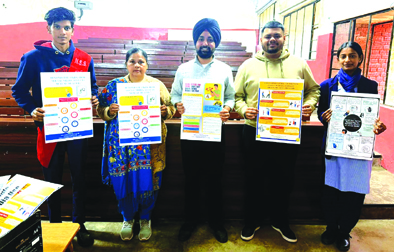
The interactive one-hour session was facilitated by Dr. Ashrajdeep Singh, Ph.D. Scholar at the Department of Community Medicine and School of Public Health, PGIMER, alongside Mr. Lakshay Jaglan, ICMR Project Technical Support-III. Moving away from traditional lecture formats, the intervention engaged students from two classes through dynamic presentations and visual, poster-based discussions. This participatory approach created a safe space for adolescents to critically evaluate their personal digital habits and speak candidly about the various challenges they encounter in the online world.
Sandeep, 11th in-charge, introduced the PGI team to the students and shared valuable insights on how social media can impact one's life, giving the lecture a perfect start. His engaging introduction set an enthusiastic and thoughtful tone for the session that followed. The session was structured around three pivotal themes, each addressing a specific challenge of the digital landscape for modern youth.
The first theme explored the digital strain on child-family relationships, illustrating how excessive screen time effects direct communication and emotional bond within the home. To counter this, students were introduced to practical "digital boundaries," such as designated screen-free zones and the prioritization of face-to-face interactions to maintain strong domestic ties. |
