 Early Times Report Early Times Report
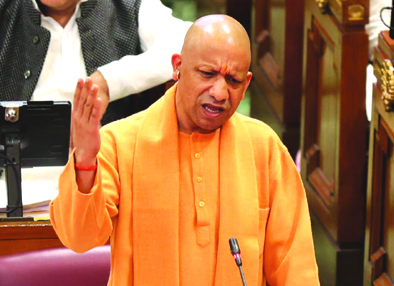
LUCKNOW, Feb 20: While participating in the discussion on budget for the financial year 2026-27 in the Assembly on Friday, Chief Minister Yogi Adityanath said, "Over the past 9 years, Uttar Pradesh has moved out of the category of the bottom three states and secured a place among the top three states in the country." He said this transformation is the outcome of clear policies, clean intent and effective financial management.
Calling the Rs 9,12,696 crore budget historic, the Chief Minister said, "For the first time in the history of Uttar Pradesh, a Chief Minister has received the opportunity to present the budget for the 10th time." Responding to questions raised by the opposition regarding financial approvals, he clarified that approvals are issued on time and the expenditure process is completely transparent.
On fiscal discipline, CM countered the opposition by stating that in 2016-17, the fiscal deficit stood at 4.39% of the Gross State Domestic Product (GSDP), which is being reduced to 2.97% in 2025-26. Similarly, the debt burden has declined from nearly 30% to around 26%, with a target of bringing it down to 23% by 2026-27.
He further noted that in 2016-17, the per capita income was around Rs 43,000, which has increased to more than Rs 1,20,000 by the end of 2024-25. "This change reflects the growing economic strength and pace of development in Uttar Pradesh", he said.
The Chief Minister added that in 2016-17, Uttar Pradesh ranked at the lower end among large states, but today the state has increased its GSDP from Rs 13 lakh crore to Rs 36 lakh crore, with a target of reaching Rs 40 lakh crore in 2026-27.
Chief Minister said, "The purpose of discussions on demands for grants is to guide departments so that they can begin work in a planned manner from the very start of the new financial year. All departments are moving forward with their respective action plans to ensure effective implementation of the budget."
He emphasized that capital expenditure has been given priority in the state. In 2016-17, capital expenditure was around Rs 71,000 crore, which has now increased to more than Rs 1,77,000 crore. Investment in infrastructure, he said, accelerates employment generation and economic activity. Infrastructure spending not only creates physical assets but also promotes job creation, industrial expansion, and overall economic momentum. According to experts, one rupee invested in infrastructure generates returns of five to six times. |
