 Early Times Report Early Times Report
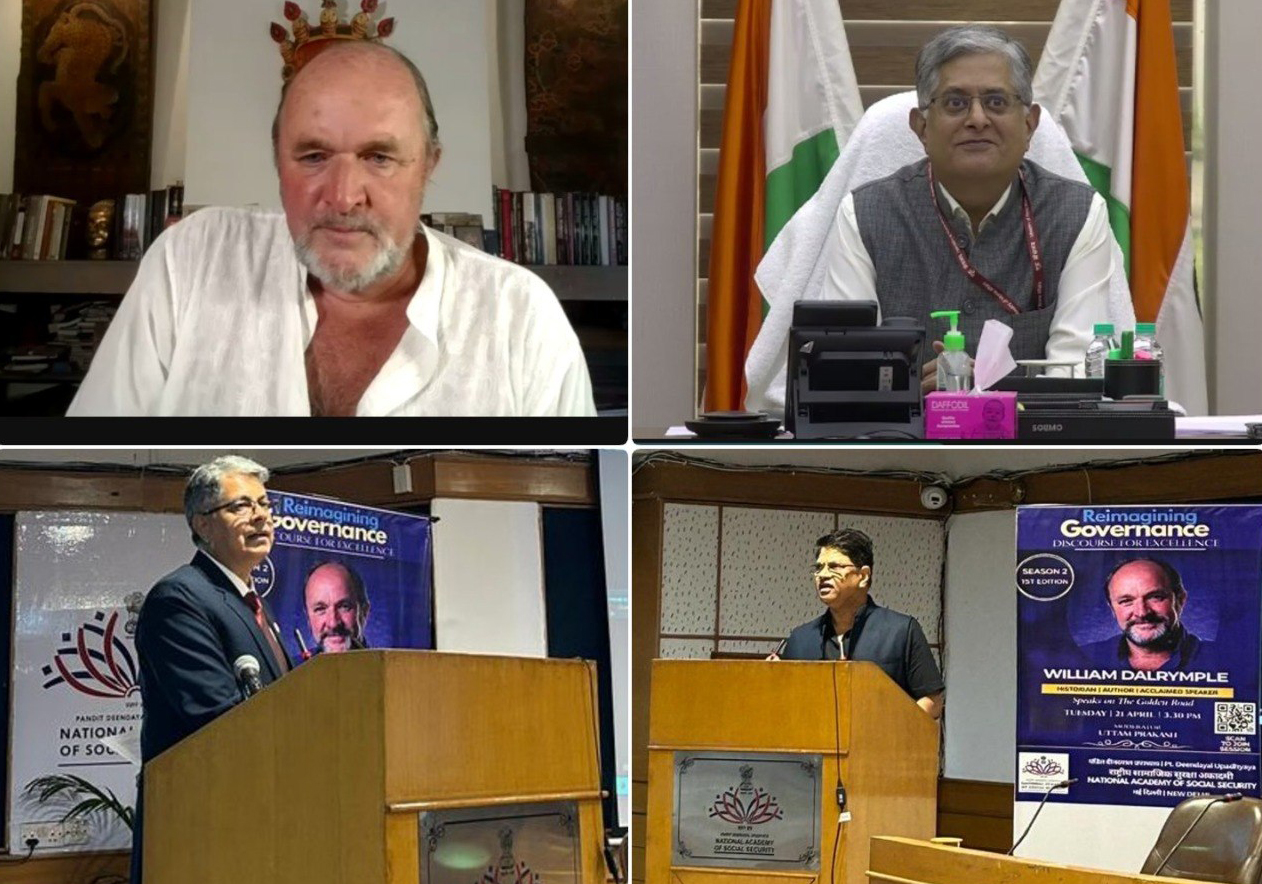
NEW DELHI, Apr 21: Marking Civil Services Day, the Employees' Provident Fund Organisation (EPFO) inaugurated Season 2 of Reimagining Governance Discourse for Excellence (RGDE) lead by PDUNASS with a keynote by historian and author William Dalrymple, reflecting on India's long arc as a civilisational connector of ideas, trade and culture.
India's historic strength, Dalrymple argued, lay not in conquest but in the movement of ideas, an openness that allowed it to shape civilizations across continents. Reclaiming that spirit, he suggested, may be central to India's future global role.
Challenging conventional narratives of the "Silk Road," he pointed to evidence that places India at the heart of ancient global exchange. Trade patterns, including the concentration of Roman wealth along India's coasts and its absence further east, indicate that India functioned as a key intermediary linking the Mediterranean world with Asia .
But trade, he noted, was only one layer of a deeper story.
India's influence travelled through ideas, through monks, scholars and traders, shaping cultures from Central Asia to Southeast Asia. The spread of Buddhism across Asia, the evolution of Indian thought within other traditions, and the transmission of mathematics, including the concept of zero, reflect a civilisational reach that was intellectual as much as economic.
What made this possible was not power in the conventional sense, but a distinctive capacity to absorb, adapt and reinterpret. Indian ideas did not remain fixed; they evolved as they moved, taking root in new contexts while retaining their philosophical depth.
At a time when global systems are once again in flux, Dalrymple suggested that this openness offers a relevant template. Nations that influence the world are not only those that project strength, but those that generate ideas and allow them to travel. The session saw active participation from officers across more than 150 field offices and various constituents of Ministry of Labour and Employment, with questions that connected history to contemporary governance.
Participants raised questions on whether civilisational influence can emerge through culture and knowledge alone, or requires hard power, and how India's historical openness might inform its present geopolitical positioning.
|