 Early Times Report Early Times Report
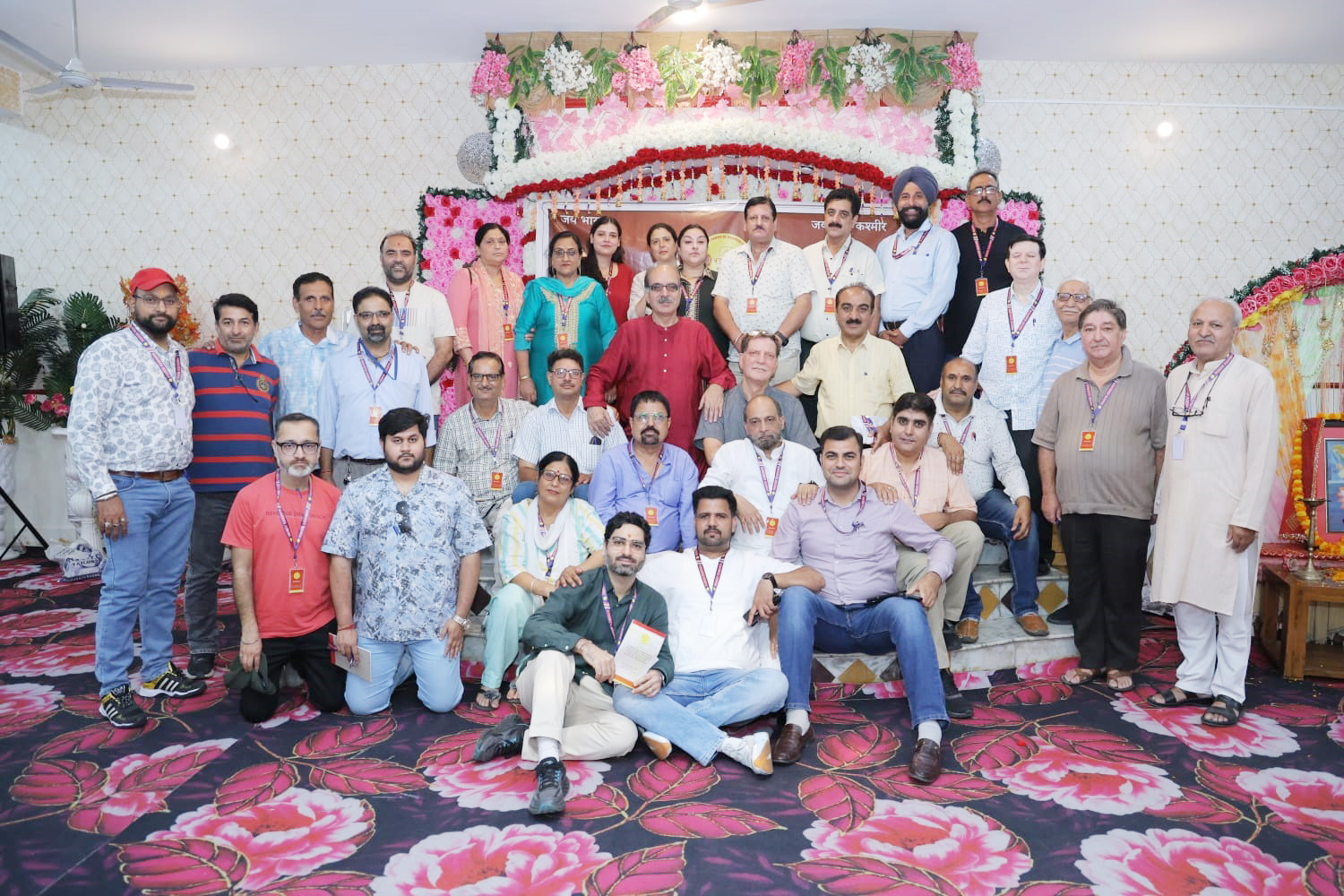
Jammu, May 24: In a landmark and ideologically significant development, Panun Kashmir today formally adopted its written Constitution during a convention of activists, senior members, and community observers held in Jammu. The convention marked a historic institutional transition of the movement from an unwritten constitutional ethos rooted in collective memory and ideological discipline to a formally codified constitutional framework designed to preserve organisational continuity, political clarity, and civilizational resolve for future generations. The day-long convention was conducted by Nitin Dhar, President Panun Kashmir Yuva and Coordinator West, who underlined the responsibility of the younger generation born in exile to carry forward the movement with ideological clarity and constitutional discipline. He described the adoption of the Constitution as “a bridge between memory and future generations,” ensuring that the struggle of Kashmiri Hindus remains institutionally anchored beyond individuals and circumstances. The convention commenced with a welcome address by Behari Lal Kaul, Organising Secretary, who reflected upon the geographical, historical, and spiritual relationship of Kashmiri Hindus with Kashmir. He described Kashmir as a civilizational cradle of Shaivite thought, Sanskrit scholarship, and Indic consciousness. Elaborating upon the concept of social contract in the context of the displaced community, he stated that Panun Kashmir represented a collective civilizational resolve to reclaim political agency, dignity, and secure existence within the framework of Indian sovereignty. He termed Panun Kashmir “the panacea to the accumulated historical, political, and existential crises confronting the community.” Kuldeep Raina, General Secretary, elaborated upon the significance of the transition from an unwritten to a written constitution. He stated that Panun Kashmir had survived for decades through ideological conviction and collective discipline despite the absence of codified institutional mechanisms and described the constitutional transition as a sign of organisational maturity. Referring to Panun Kashmir as a historic response to “over seven centuries of genocidal waves against the Hindus of Kashmir,” he asserted that one of the movement’s greatest achievements had been its success in creating and sustaining a national discourse around the genocide and displacement of Kashmiri Hindus despite decades of denial and distortion.
The keynote constitutional lecture was delivered by Tito Ganju, Chairman, who spoke extensively on the historical and institutional significance of codifying the ideological foundations of Panun Kashmir. He stated that the movement had carried within itself an unwritten constitutional culture for decades through shared conviction, historical consciousness, and collective discipline, but that enduring civilizational movements eventually require codification in order to ensure continuity beyond generations. |
