 Early Times Report Early Times Report
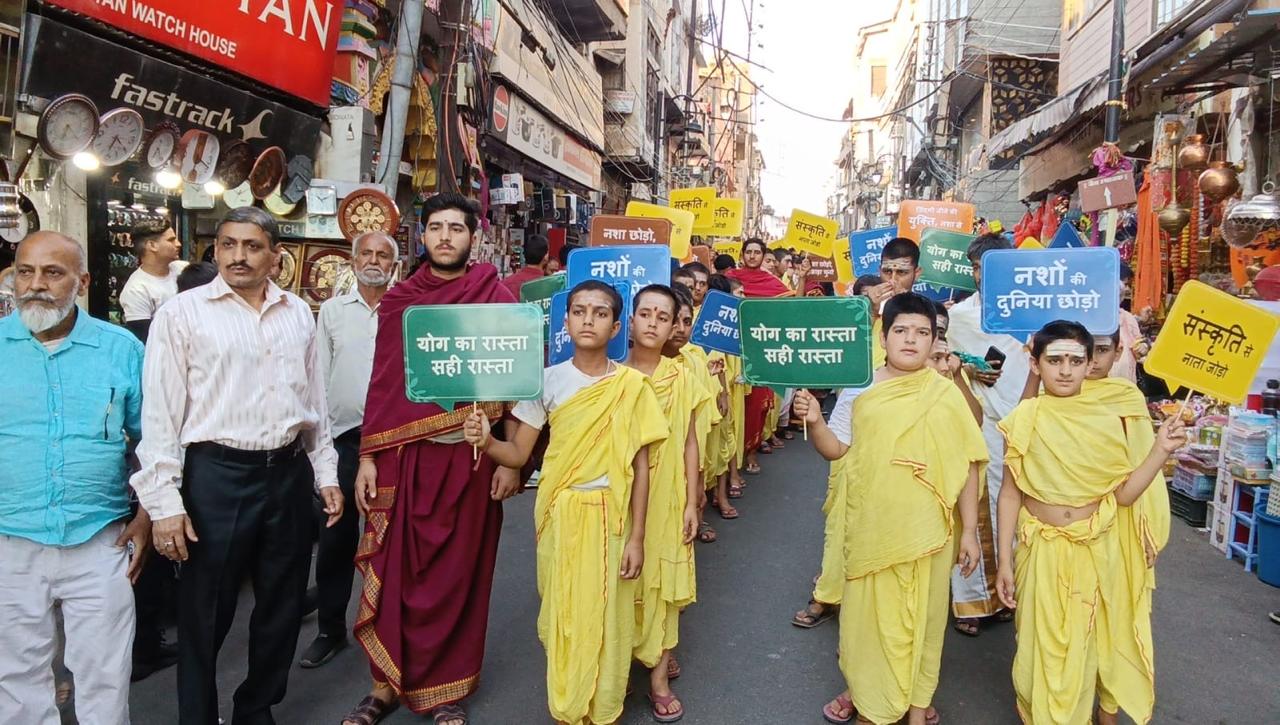
JAMMU, May 26: Jammu city today witnessed a powerful and unique anti-drug campaign that brought its busy, bustling bazars to a standstill with a profound message of cultural revival and resilience. The air resonated with the sacred roar of conches and the rhythmic clanging of gongs, interspersed with high-energy anti-drug slogans. Leading the charge through the crowded marketplaces were young Batuks (students) clad in traditional dhotis from the Panjvaktar Mahadev Ved Pathshalla, marching shoulder-to-shoulder with the formidable Pahalwans (wrestlers), headed by Akhara President Bodh Raj, of the 160-year-old Dewan Mandir Akhara.
The public Padyatra (awareness march) marks a major civil society escalation against the narcotics menace gripping the region, responding directly to the Lieutenant Governor's clarion call for a drug-free Jammu and Kashmir.
Recent data highlights a staggering crisis: nearly ten percent of local youth are trapped in substance abuse. A severe addict spends an estimated Rs 80,000 to Rs 90,000 per month to sustain the habit-a crushing financial burden that frequently drives vulnerable young individuals toward anti-social activities and crime.
Reclaiming Youth through Physical and Spiritual Might
The campaign offers Jammu's youth a dual shield against addiction by bringing two historic institutions to the frontline:
The Dewan Mandir Akhara (Est. 160+ years):Championing physical fitness, discipline, and a healthy lifestyle through traditional sports like wrestling to keep youth away from dark paths.
Panjvaktar Mahadev Ved Pathshalla: Instilling Vedic core values, reminding society that inner spiritual strength is the ultimate anchor during difficult times.
The central theme of the campaign, encapsulated in its unifying slogan (The Art of Living is Freedom from Addiction)-aims to shift public consciousness from despair to empowered, holistic action.
Reflecting on the deeper sociological and spiritual dimension of the crisis, Suresh Kumar Sharma, the Receiver for both Dewan Mandir and Panjvaktar Mandir, stated:
"We must acknowledge that those suffering from substance abuse cannot break free in isolation. Addiction is not a mere behavioral flaw or a bad habit; it is a profound medical crisis that alters a person's internal biochemistry, creating a deep dependency. To surmount this, a person needs more than just individual willpower-they require the compassionate embrace of their family, the solidarity of society, and a strong anchorage to spiritual moorings." |
