 Early Times Report Early Times Report
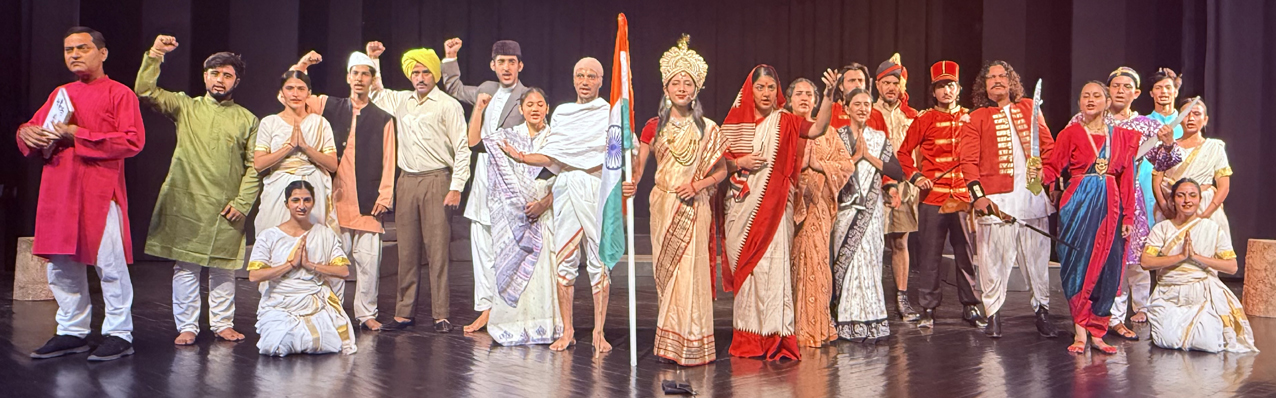
JAMMU, July 15: Marking the historic 150th anniversary of Vande Mataram, Natrang today presented its new Hindi theatrical production Aazadi Ki Gaatha at Abhinav Theatre, Jammu. The production has been supported by the Sangeet Natak Akademi, New Delhi, as part of the nationwide celebrations commemorating the iconic patriotic song, in collaboration with the Jammu and Kashmir Academy of Art, Culture and Languages. The play has been written and directed by Pawan Verma.
Aazadi Ki Gaatha is a stirring theatrical tribute to India's freedom struggle, portraying the extraordinary courage, sacrifice, and patriotism of the nation's immortal freedom fighters. Conceived as a series of powerful dramatic episodes interconnected through the presence of a Sutradhar (Narrator) and the symbolic figure of Bharat Mata, the play takes audiences on an inspiring journey from the First War of Independence in 1857 to the historic dawn of freedom on 15 August 1947.
The narrative opens with the emotional appeal of Bharat Mata, who mourns the suffering of her children under British colonial rule. Answering her call, Mangal Pandey emerges as the first spark of rebellion, refusing to compromise his faith and dignity in the face of oppression. His supreme sacrifice ignites the spirit of resistance across the country.
The play then shifts to the legendary Rani Lakshmibai of Jhansi, whose fearless opposition to the Doctrine of Lapse stands as an enduring symbol of courage, honour, and unwavering patriotism. It also recreates the birth and evolution of Vande Mataram, illustrating how the song became the heartbeat of India's freedom movement, inspiring millions despite repeated attempts by the British to suppress it.
The production further celebrates the inspiring leadership of Sarojini Naidu, whose powerful speeches awakened the national conscience and encouraged women and youth to actively participate in the struggle for independence. The revolutionary movement reaches its emotional peak with the unforgettable sacrifices of Bhagat Singh, Rajguru, and Sukhdev, whose fearless commitment to the nation demonstrated that true freedom demands the highest form of courage.
The concluding chapters portray Mahatma Gandhi's philosophy of truth, non-violence, self-reliance, and mass civil resistance, culminating in the achievement of India's Independence on 15 August 1947. The finale celebrates the triumph of freedom while reminding audiences that independence is not merely a historical milestone but a continuing responsibility to uphold unity, equality, justice, secular values, and national integrity. |