 Early Times Report Early Times Report
NEW DELHI, July 15: The Pandit Deendayal Upadhyaya National Academy of Social Security (PDUNASS), New Delhi, today inaugurated a three-day Training Programme on "Recovery Management" for Regional Labour Commissioners (Central). The programme, being conducted from 15 to 17 July 2026, marks another significant step in PDUNASS's expanding role as a national institution for capacity building through inter-institutional collaboration. While established as the apex training institute of the Employees' Provident Fund Organisation (EPFO), PDUNASS has increasingly been partnering with allied institutions under the Ministry of Labour & Employment to strengthen professional competencies across the broader social security and labour administration ecosystem.
The programme is being attended by 26 Regional Labour Commissioners (Central) from across the country and has been designed to enhance their understanding of the legal, procedural and practical dimensions of recovery proceedings while promoting the adoption of best administrative practices.
The inaugural session was graced by Kumar Rohit, Director PDUNASS, along with Shri Amit Vashist, ACC PDUNASS Faridabad Campus, and Saurabh Suman Prasad, RPFC-I, PDUNASS. The programme is being conducted under the guidance of Rizwan Uddin, RPFC-I & Chief Learning Officer, as Course Director, and Dhirendra Meena, RPFC-II, as Deputy Course Director.
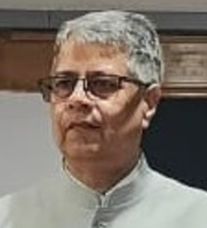
Addressing the participants, Kumar Rohit emphasized that recovery management extends well beyond the mere enforcement of statutory provisions. During an interactive discussion, he invited participants to explain the existing mechanism for initiating recovery proceedings, wherein it was deliberated that Recovery Certificates issued by the Chief Labour Commissioner (Central) are executed through the District Magistrate. He observed that while statutory powers provide the legal authority for enforcement, their effective exercise requires officers to possess a sound understanding of the legal framework, procedural fairness, administrative prudence and professional integrity.
Highlighting the human dimension of public administration, the Director noted that recovery officers invariably interact with individuals facing diverse financial and personal circumstances. While strict adherence to law remains fundamental, he emphasized that effective communication, empathy and persuasive engagement are equally important in facilitating voluntary compliance and ensuring that statutory objectives are achieved in a fair and citizen-centric manner. He remarked that combining legal expertise with behavioural competencies not only improves the effectiveness of recovery proceedings but also strengthens public confidence in government institutions.
Kumar Rohit further encouraged the participants to take advantage of PDUNASS's vibrant academic ecosystem and culture of continuous learning. He apprised them of the Academy's initiatives, including the Delicious Initiative and the Book Review Programme, which promote reading habits, critical thinking, knowledge sharing and intellectual engagement among officers. He urged the participants to actively engage with these initiatives as part of their professional development.
The Director observed that the contemporary governance landscape requires public administrators who are legally proficient, professionally competent and people-centric. He noted that such capacity-building programmes play an important role in nurturing officers capable of balancing statutory responsibilities with responsive and compassionate public service delivery.
The three-day programme comprises expert-led sessions on the statutory framework governing recovery proceedings, procedural safeguards, practical challenges, case studies and emerging best practices, providing participants with practical insights for effective discharge of their responsibilities.
The programme further reinforces PDUNASS's emergence as a premier national institution for capacity building, fostering cross-institutional collaboration and knowledge exchange across organizations engaged in labour administration and social security governance. Through such initiatives, the Academy continues to contribute towards developing a skilled, future-ready and citizen-centric public service ecosystem. |
