 Early Times Report Early Times Report
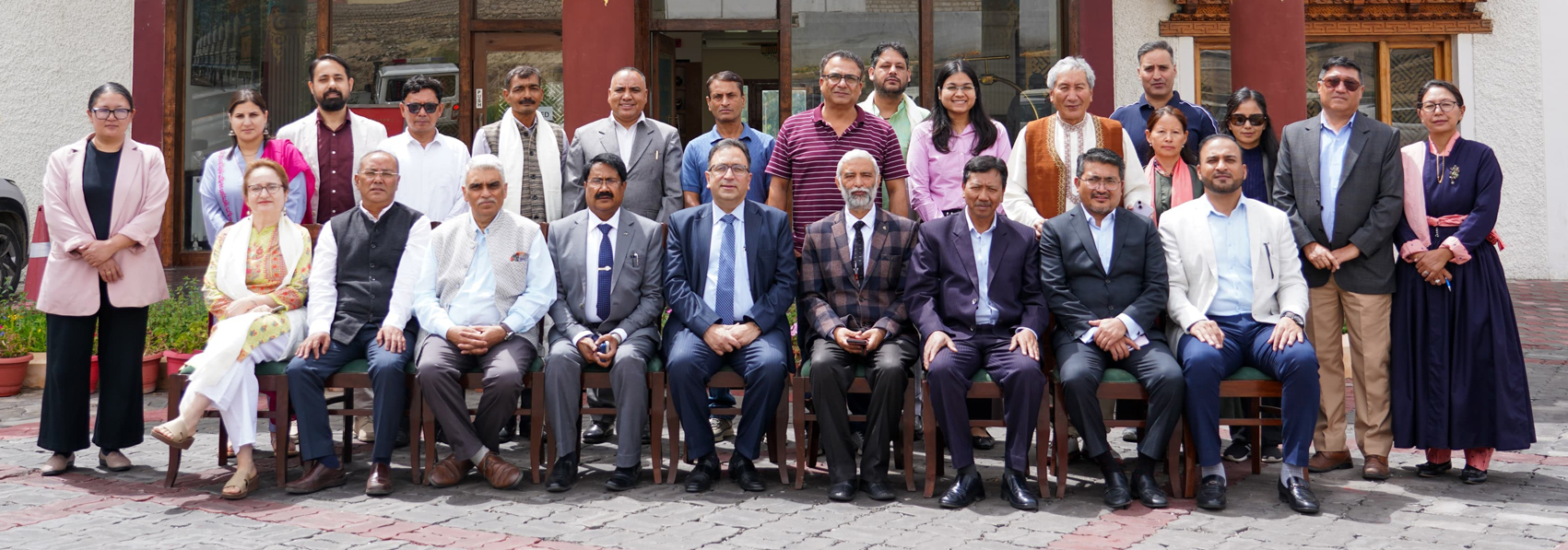
LEH, July 23: A two-day International Conference on "Legal Framework of Election Management Body Independence" commenced today at Hotel Diskitsal, Leh, bringing together constitutional experts, election administrators, legal scholars, academicians and international delegates to deliberate on strengthening the institutional independence of Election Management Bodies (EMBs) and advancing global democratic governance. The conference is being organised by the Office of the Chief Electoral Officer, Union Territory of Ladakh, in collaboration with the India International Institute of Democracy and Election Management (IIIDEM), the Election Commission of India (ECI), and the International Institute for Democracy and Electoral Assistance (International IDEA). The inaugural session was graced by the Chief Secretary of UT Ladakh, Ashish Kundra, as the Chief Guest. The conference witnessed participation from senior officials of the Election Commission of India, the Chief Electoral Officer and Deputy Chief Electoral Officer of Ladakh, Vice Chancellors of the University of Ladakh and the Central University of Ladakh, constitutional and legal scholars, representatives of International IDEA, foreign delegates, members of the judiciary and tribunals, heads of various government departments, students and early-career researchers from across the country. Welcoming the participants, Chief Electoral Officer, UT Ladakh, Shri Rahul Sharma, described the conference as a significant platform for fostering dialogue on strengthening democratic institutions through independent, transparent and accountable election management systems. He said that credible electoral institutions remain the cornerstone of democracy and highlighted the importance of continuously evolving legal frameworks to address emerging challenges while safeguarding the voting rights of every eligible citizen, irrespective of geographical location. Delivering the keynote address, Chief Secretary Shri Ashish Kundra underscored the pivotal role of independent Election Management Bodies in preserving the integrity and credibility of democratic systems. He observed that India's electoral process has continuously evolved under the constitutional framework to ensure inclusivity, transparency and universal participation. Tracing the evolution of the country's electoral system from ballot boxes to Electronic Voting Machines (EVMs), he highlighted the Election Commission of India's commitment to adopting technological innovations while safeguarding the principles of free and fair elections.
The Chief Secretary noted that technological advancements such as EVMs, VVPATs and ongoing research into remote voting solutions demonstrate India's leadership in electoral innovation. Referring to pilot initiatives on remote voting technologies, including blockchain-based solutions, he said such innovations have the potential to facilitate greater participation by migrant voters while maintaining the integrity and transparency of the electoral process. He emphasised that public trust remains the foundation of every democratic election and that every reform must strengthen the credibility of electoral institutions. |