news details |
|
|
| AIIMS Jammu advances minimally invasive cranial and spinal care | | | 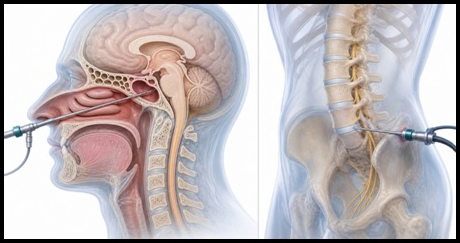 Early Times Report Early Times Report
JAMMU, Aug 29: The Department of Neurosurgery, AIIMS Jammu, has successfully performed a series of advanced endoscopic and minimally invasive cranial and spinal surgical procedures, reinforcing the institute's commitment to bringing contemporary neurosurgical care closer to the people of Jammu & Kashmir and adjoining regions.
These procedures have been undertaken using incision-less endoscopic routes wherever feasible, or through very small, strategically placed incisions. Such approaches are designed to minimize tissue disruption while enabling safe and effective treatment of complex brain and spinal disorders.
The Department has successfully performed minimally invasive and endoscopic spinal surgeries for patients with lumbar disc prolapse and lumbar canal stenosis, with excellent clinical outcomes. These procedures address common causes of severe back pain, radiating leg pain, numbness, weakness, and difficulty walking. Compared with conventional open surgery in appropriately selected patients, minimally invasive spinal techniques require less muscle dissection and cause less disturbance to surrounding tissues.
The Department of Neurosurgery recently performed a complex endoscopic resection of a malignant brain tumour in collaboration with the Department of ENT at AIIMS Jammu. The tumour was arising from the skull base and was compressing critical areas near the brainstem in a 28-year-old woman from Kashmir. The multidisciplinary endoscopic approach enabled the surgical teams to access the lesion through a natural corridor, avoiding a large incision and facilitating precise removal of the tumour while protecting vital neurovascular structures.
The Department has also performed minimally invasive surgery for brain tumours through a keyhole approach, using a small eyebrow incision. This technique offers an effective operative route for selected cranial lesions while providing favourable cosmetic results. In addition, endoscopic surgery for pituitary tumours is routinely performed in the department, allowing access to many pituitary and skull-base lesions through the nasal route without requiring a conventional large skull opening.
Dr. Shaurya Darbari, Officiating Head, Department of Neurosurgery, AIIMS Jammu, said:
"Emerging technologies in neurosurgery are increasingly focused on minimally invasive and endoscopic approaches. At the Department of Neurosurgery, AIIMS Jammu, we are working towards expanding the use of such established techniques to provide safe, precise and effective treatment while reducing the overall surgical impact on the patient. The objective is not merely to reduce the size of the incision, but to minimise tissue disruption while maintaining safety, precision, and effectiveness. These techniques can provide good cosmetic outcomes and may shorten hospital stay in appropriately selected cases. In spinal surgery, reduced muscle dissection can translate into less postoperative pain, earlier mobilisation, faster recovery, and an earlier return to routine activities and work.
He added that favourable outcomes depend on careful patient selection, detailed imaging-based planning, specialised instruments, advanced endoscopic visualisation, and coordinated multidisciplinary teamwork. He expressed his appreciation for the active contribution of Dr. Kanav Gupta, Assistant Professor, Department of Neurosurgery and the anaesthesia, operating theatre, nursing and critical-care teams, whose coordinated efforts have been instrumental in delivering these advanced procedures safely and effectively.
Prof. (Dr.) Sanjeev Sinha, Executive Director & CEO, AIIMS Jammu, congratulated the Department of Neurosurgery and collaborating teams on their achievement. He stated:
"AIIMS Jammu is committed to adopting newer, established, evidence-based technologies that improve surgical precision, reduce patient morbidity, and enhance recovery, while ensuring that these advances are implemented responsibly and with patient safety as the foremost priority. |
|
|
|
|
|
|
|
|
|
|
|
|
| |
| |
|
|
|
|
 |
|
|
