news details |
|
|
| Great Soul vs. Supreme Soul: The two dimensions of Non-Violence | | | 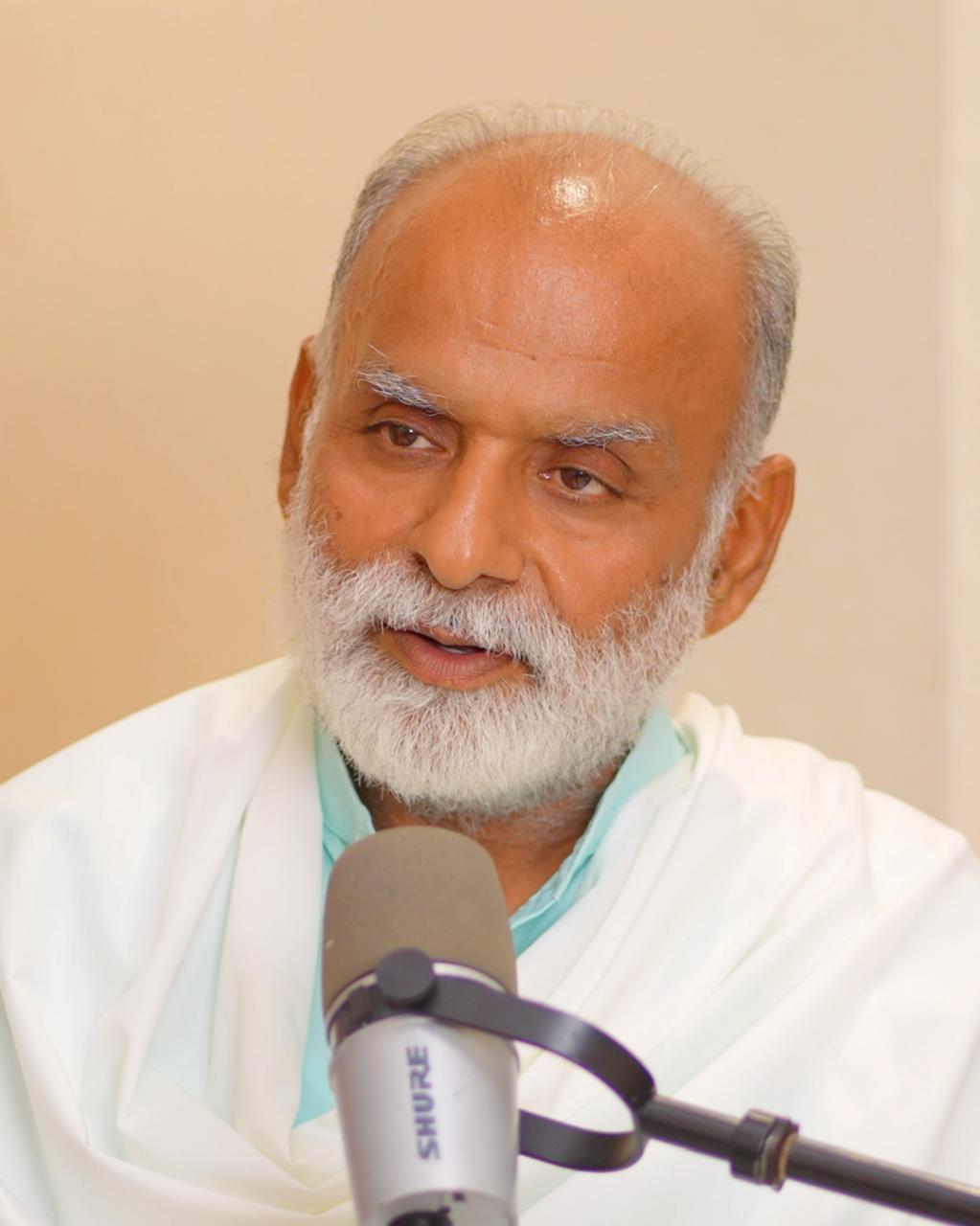 Today we are celebrating Mahatma Gandhi’s life’s contribution to our nation. Both Mahatma Gandhi and Mahavir Swami adopted “non-violence,” yet their concepts of it differed. One was called a Great Soul (Mahatma), and the other became the Supreme Soul (Parmatma). Mahatma Gandhi was of this era, whereas Mahavir Swami lived 2,500 years ago. It is such a coincidence of nature, the journeys of their lives began in Gujarat. Mahatma Gandhi was born in Gujarat, and followers of Mahavir Swami’s Jain followers are mostly from Gujarat too. Mahatma Gandhi’s image was printed on every currency note as a standard of authenticity, so that it is considered valid. But the banknote without his image will be invalid. Today we are celebrating Mahatma Gandhi’s life’s contribution to our nation. Both Mahatma Gandhi and Mahavir Swami adopted “non-violence,” yet their concepts of it differed. One was called a Great Soul (Mahatma), and the other became the Supreme Soul (Parmatma). Mahatma Gandhi was of this era, whereas Mahavir Swami lived 2,500 years ago. It is such a coincidence of nature, the journeys of their lives began in Gujarat. Mahatma Gandhi was born in Gujarat, and followers of Mahavir Swami’s Jain followers are mostly from Gujarat too. Mahatma Gandhi’s image was printed on every currency note as a standard of authenticity, so that it is considered valid. But the banknote without his image will be invalid.
What did Mahatma Gandhi do? His main principle was ‘non-violence.’ He raised his voice to break the chains of slavery, and resulted in harsh British atrocities. When one person attacks, another retaliates; what would be wrong with that? One is hurt more than the other. Between the gun and the baton, the gun always wins.
Mahatma Gandhi observed that the British were overpowering. Inspired by Mahavir Swami, Mahatma Gandhi chose the path of ‘non-violence,’ because he realised that even after so much persecution, Mahavir Swami never retaliated. When someone threw stones at him, he never reacted in kind. Mahatma Gandhi had studied in the West; therefore, he was also influenced by Jesus’ teachings that if someone slaps you on one cheek, you should turn the other cheek as well.
Mahatma Gandhi said that the British had arms and ammunition, which could destroy us all, and the British also have souls. That is why he implemented ‘non-violence’ against them. How much exploitation can a person do? Therefore, we shouldn’t resort to violence; let them kill as they please. We must not respond to their external violence; let us be silent and observe how many people they will kill. No matter the atrocities one may commit, if you remain silent and do not react, then no matter how low a person stoops, one day, one hundred per cent, he will fall at your feet. This is what non-violence truly is.
Mahatma Gandhi said, “People of India! Get ready to be martyred; now the time has come - death or freedom. We only have one weapon, and that is non-violence; ‘Non-violence is the supreme duty.’” In the end, the opponents’ very souls trembled, and the country gained independence. Mahatma Gandhi led the country to freedom through non-violence. For the sake of that very non-violence, Rabindranath Tagore bestowed the title of ‘Mahatma’ on Mohandas Karamchand Gandhi. Mahatma means a Great Soul. He was called a “great soul” because, had he not adopted the path of non-violence in his life, God knows how far-fetched freedom would have been.
With minimal clothing on his body and a walking stick in his hand, he won India’s freedom. Later, he was declared the “Father of the Nation.”
Non-violence led Mahavir Swami to attain superconsciousness, but why did Gandhi remain a great soul (Mahatma) and fail to reach the supreme state of consciousness? Mahavir Swami was called God; he is worshipped. A new wave started with him, and everyone called themselves “Jains,” meaning they got connected with the lineage of Mahavir Swami. It became a family of millions. But Mahatma Gandhi couldn’t build this huge family; where did it go wrong? Mahavir Swami’s non-violence was neither about the outer self nor the inner self; he went beyond both, thereby being called a Supreme Being (Paramatma). Mahavir Swami was unaffected by the happenings in the outer world. He kept delivering his message outwardly, yet inwardly unattached, without any expectation that things should go his way. He remained in a state of relaxation.
Mahatma Gandhi’s non-violence movement moved him from inward to outward and vice versa, but he couldn’t go beyond both. He became attached to attaining freedom for the country. He chose non-violence, and had no desire for a position; thus, he became introspective too. Yet, the attachment to gaining independence for the country and seeing everyone happy turned his focus outward. He was stuck somewhere in between.
The partition of the country happened against everyone’s wishes. He said it was wrong, yet the partition happened, and in the process, he even lost his life. He was devastated by the partition. The distress was so great that he went on a hunger strike to persuade people, saying, “Agree, or else I will die.” Mahatma Gandhi’s feelings remained unchanged; he became sorrowful due to his attachments. He couldn’t detach; that is why he remained a Great Soul but could not become a Supreme Soul; and that was the essential difference.
MAAsterG’s invaluable and transcendental wisdom is available free of charge on his YouTube channels, ‘MAAsterG’ and ‘GOD HOME JOURNEY.’ MAAsterG guarantees that merely by listening to 3 to 30 of his lectures, you will witness a tangible transformation in your own life. |
|
|
|
|
|
|
|
|
|
|
|
|
| |
| |
|
|
|
|
 |
|
|
