 Early Times Report Early Times Report
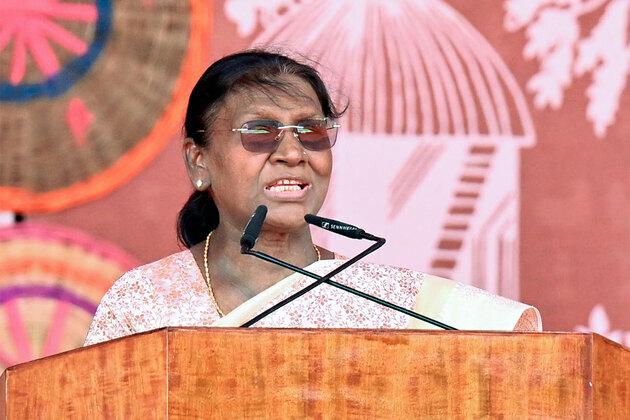
NEW DELHI, May 17: President Droupadi Murmu on Sunday has promulgated an ordinance increasing the number of judges in the Supreme Court to 37 — excluding the Chief Justice of India (CJI). The gazette notification, dated May 16, stated the “Parliament is not in session and the President is satisfied that the circumstances exist which render it necessary for her to take immediate action”.
The ordinance is called the Supreme Court (Number of Judges) Amendment Ordinance, 2026.
The ordinance was promulgated in accordance with the powers of the President under Article 123 of the Constitution. The ordinance would be placed in both Houses of the Parliament when it convenes. It would cease to operate if six weeks expire without any resolution passed on it after the reassembly of the Parliament or if resolutions are passed in both Houses of the Parliament disapproving the ordinance. The President could also withdraw the ordinance at anytime.
The current ordinance has amended Section 2 of the Supreme Court (Number of Judges) Act, 1956 to replace the word ‘thirty-three’ with ‘thirty-seven’.
The promulgation has happened nearly two weeks after the Union Cabinet approved the proposal to increase the number of Supreme Court judges. With the ordinance in place, the total sanctioned judicial strength in the Supreme Court, including the Chief Justice of India, would rise from 34 to 38.
The move is seen as a step towards tiding over the continuing crisis of pendency plaguing the court for years now, especially after the pandemic, when the facility of e-filing of cases caught on. The current backlog is over 93000 cases, and threatening to reach six figures even as the court is going into summer recess or ‘partial working days’ in June.
The government’s approval for more judges in the Supreme Court had come after a six-year hiatus. The Parliament had last amended Section 2 of the Supreme Court (Number of Judges) Act, 1956 in 2019, raising the sanctioned strength from 31 to 33, that is, excluding the Chief Justice of India.
Presently, there are two judicial vacancies in the top court. These are of the current Chief Justice of India Surya Kant’s immediate predecessor, Justice B.R. Gavai, who retired in November 2025, and Justice Rajesh Bindal, who completed office in April 2026.
Three more apex judges are scheduled to retire in 2026. Justices J.K. Maheshwari and Pankaj Mithal would end their tenure in office next month in June, and Justice Sanjay Karol is due to retire in August 2026.
The Framers of the Constitution had originally in Article 124(1) envisaged a Supreme Court consisting of the Chief Justice of India and “not more than seven judges” until the “Parliament by law prescribes a larger number”. |
