 Early Times Report Early Times Report
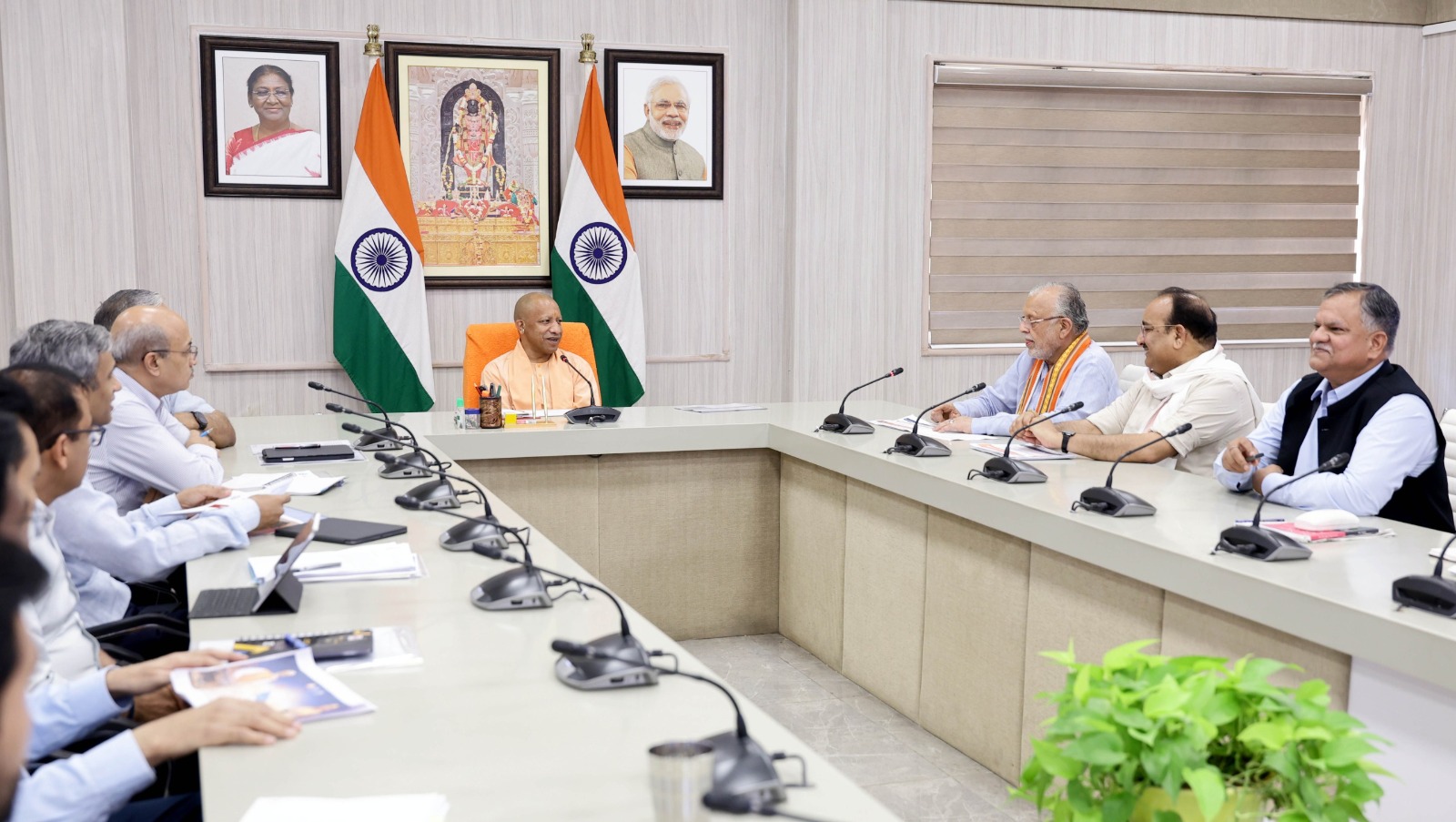
LUCKNOW, May 20: Chief Minister Yogi Adityanath on Wednesday conducted a high-level review of three important subjects linked to the future economy of the state, which include the Uttar Pradesh Data Centre Cluster (UPDCC), Project Ganga, and possible exemption in mandi fee and cess to promote in-house processing of wheat. Reviewing the Uttar Pradesh Data Centre Cluster (UPDCC), the Chief Minister said that the project will create the basic infrastructure for Uttar Pradesh's AI mission. He said, "The Data Centre Cluster should not remain limited to the NCR region and other parts of the state should also be connected with it." Chief Minister directed that the project can begin from the Bundelkhand Industrial Development Authority (BIDA) area, where large-scale land is available. Dialogue should be established with major tech companies, including the Tata Group, to develop Lucknow as an 'AI City'. It was informed during the meeting that the Uttar Pradesh Data Centre Cluster is a long-term strategy to make the state the biggest AI compute power centre of India and the Global South. Its objective is to make Uttar Pradesh a global hub for artificial intelligence, data centres, cloud infrastructure and high-tech digital manufacturing. The presentation informs that this is not just a project but a blueprint for the new economic structure of Uttar Pradesh for the next 50 years. Under this, targets have been set to build a 5 trillion dollar economy, generate more than 1.5 lakh direct jobs and develop a 5-gigawatt AI compute corridor by 2040.
It was told during the meeting that by 2040, the world's new economy will develop around 'future arenas' such as AI, cloud, cyber security, semiconductors, electric vehicles, robotics and space technology, whose combined global market could reach 29 to 48 trillion dollars.
For India, sectors like AI software and services, cloud services, cyber security, semiconductors, aerospace and EVs will become major economic engines of the future.
The meeting highlighted Uttar Pradesh's 5 major structural strengths which include the geographical location, vast land availability, large youth population, rapidly developing infrastructure and strong leadership. |
