news details |
|
|
| From 'death trap' to lifeline: Ramsoo viaduct, Digdol tunnel transform travel on highway | | | 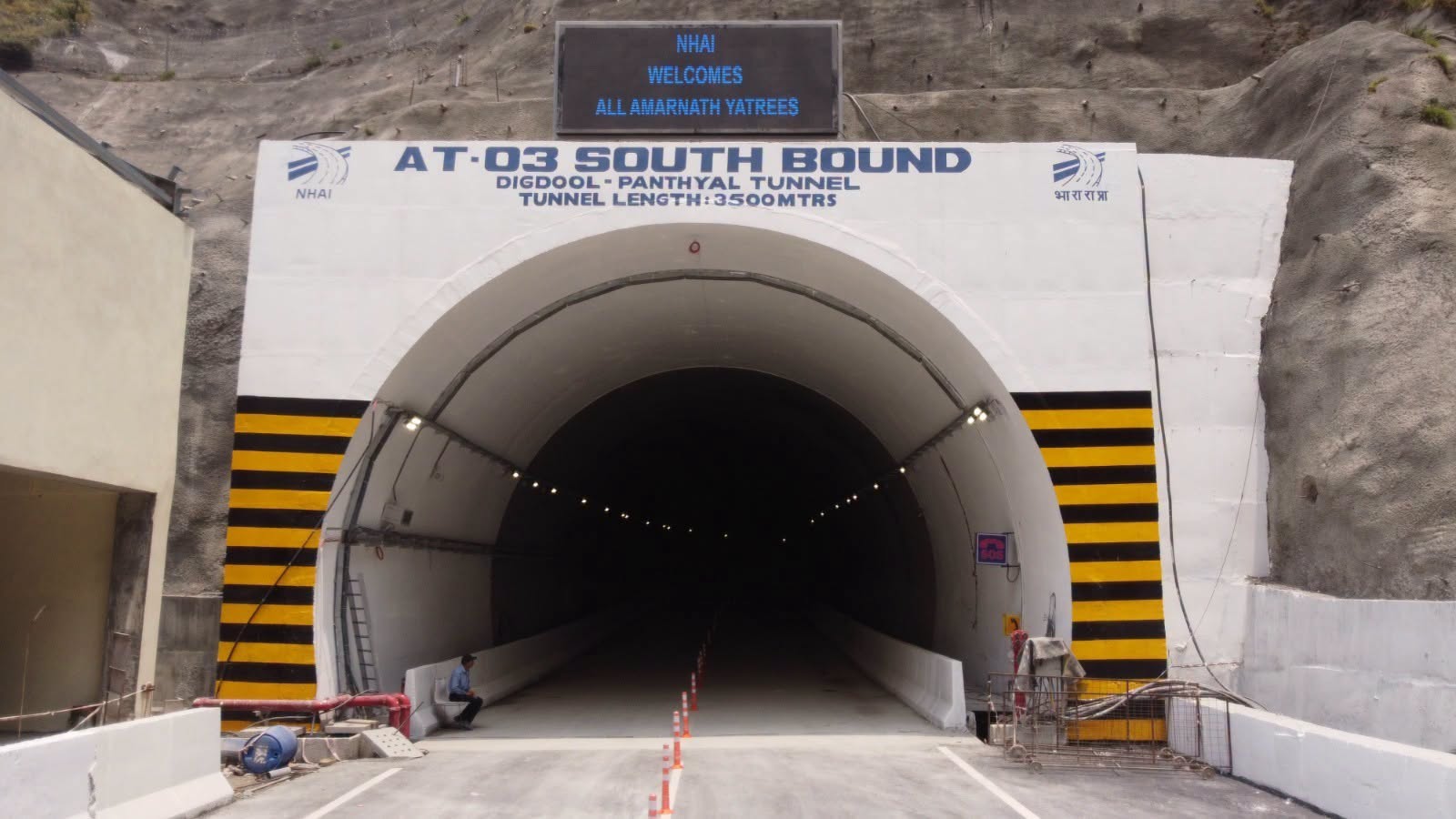 Early Times Report Early Times Report
Jammu, July 1: Once notorious for frequent landslides, falling rocks and fatal accidents, the Ramban–Banihal stretch of the Jammu-Srinagar National Highway (NH-44) is poised for a major transformation with the completion of the 810-metre Ramsoo Viaduct and the 3.5-km AT-03 tunnel connecting Digdol to Panthyal.
For decades, the treacherous stretch between Ramban, Digdol and Panthyal was dreaded by commuters and transporters alike. Popularly referred to by locals as a "death trap" because of recurring landslides, shooting stones and road cave-ins, the highway often remained blocked for hours or even days, leaving thousands of passengers stranded and disrupting the movement of essential supplies and security forces.
The completion of the two strategically significant infrastructure projects is now set to change that narrative by providing a safer, faster and all-weather alternative along one of the most vulnerable sections of NH-44.
Constructed as part of the ongoing four-laning of the Ramban-Banihal corridor, the projects are expected to significantly improve connectivity between Jammu and the Kashmir Valley while bypassing landslide-prone stretches that have long plagued the highway.
Local residents have welcomed the development, saying it will dramatically improve their daily lives.
"Earlier, whenever there were heavy rains or falling rocks, people had to wait for hours and sometimes even days on either side of the highway. Now, we can travel from Digdol to the Ramsoo-Magarkote side in just five minutes. We sincerely thank the government for constructing this tunnel," a local resident said.
Perched in the rugged Himalayan terrain, the Ramban-Banihal section serves as the only all-weather road link connecting the Kashmir Valley with the rest of the country. Its steep mountainsides, fragile geology and recurring landslides have made it one of the most challenging stretches on the national highway network.
The newly completed Ramsoo Viaduct and Digdol-Panthyal Twin Tube Tunnel have been designed to overcome these geographical challenges by ensuring safer, uninterrupted and weather-resilient connectivity throughout the year.
Officials said the projects are expected to substantially reduce travel time between Jammu and Srinagar, benefiting tourists, local commuters, transport operators and businesses by cutting delays, lowering transportation costs and improving the movement of goods.
The improved road infrastructure will also strengthen strategic mobility by facilitating faster deployment of the Army and other security forces along the vital corridor, enabling quicker response during emergencies and enhancing national security logistics.
Before the construction of these projects, the nearly 36-kilometre Ramban-Banihal stretch had gained notoriety for frequent road accidents, repeated landslides and sinking road patches, often bringing traffic to a complete standstill. With the completion of the viaduct and tunnel, the once unpredictable and hazardous route is expected to emerge as a safer and more reliable lifeline for the Kashmir Valley.
The projects, scheduled to be opened to traffic on July 3 ahead of the annual Shri Amarnath Ji Yatra, are expected to not only ensure a smoother pilgrimage but also provide a lasting boost to connectivity, tourism, trade and economic activity in Jammu and Kashmir. |
|
|
|
|
|
|
|
|
|
|
|
|
| |
| |
|
|
|
|
 |
|
|
