 Early Times Report Early Times Report
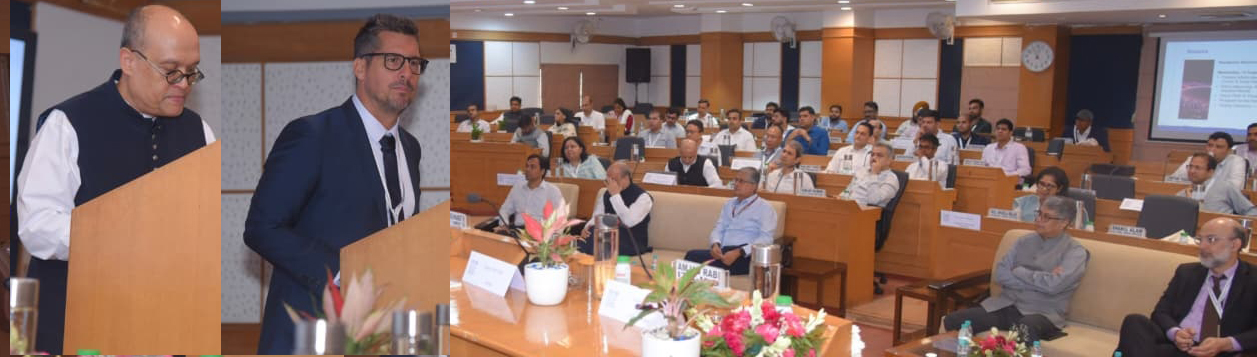
NEW DELHI, Aug 10: The Pandit Deendayal Upadhyaya National Academy of Social Security (PDUNASS) inaugurated the residential phase of a specialized training programme titled "Actuarial Practices in Social Security: Strengthening Actuarial Governance at EPFO India" today in New Delhi.
Organized jointly by the Employees' Provident Fund Organisation (EPFO) and the International Training Centre of the International Labour Organization (ITC-ILO), the three-day residential phase (10-12 August 2026) follows a comprehensive online module conducted via the ITC-ILO e-Campus from 25 May to 9 August 2026.
The inaugural session commenced with the traditional lighting of the lamp, followed by addresses from key dignitaries and international experts.
Key Highlights & Addresses
1. Welcome Address by Director, PDUNASS
Welcoming the Chief Guest and the ILO/ITC-ILO delegation, Kumar Rohit, Director, PDUNASS, noted that the initiative aligns with PDUNASS's mandate as EPFO's apex training institute to bring internationally benchmarked learning to its officers. Expressing gratitude for the strategic partnership, he remarked:
"With the EPF, EPS, and EDLI schemes aligning with the Code on Social Security, 2020, strengthening in-house actuarial capacity is both timely and essential."
2. Remarks by ILO Representative
Oktavianto Pasaribu, Deputy Director and Senior Advisor for Regional Partnership and Resource Mobilization, ILO, highlighted that the collaboration reflects the ILO's commitment to strengthening social protection systems across South Asia. He emphasized that sound actuarial governance is central to the financial sustainability of social security institutions and commended EPFO's proactive approach to building in-house capacity.
3. Course Overview by ITC-ILO Faculty
Presenting an overview of the curriculum, Charles Crevier, ITC-ILO Faculty, outlined the blended structure of the programme and the key residential themes, which include:
"Actuarial valuation methods
"Asset-Liability Management (ALM)
"Global best governan "CPFC Declares Programme Inaugurated; Calls Actuarial Governance a Strategic Imperative for EPFO
"Joint initiative by EPFO and ITC-ILO under the ILO
"Officials from EPFO and ESIC participate in three-day residential phase
4. Keynote Address & Formal Inauguration by Central Provident Fund Commissioner (CPFC)
Delivering the keynote address and formally declaring the programme inaugurated, Ramesh Krishnamurthi, CPFC, observed that as custodian of retirement savings, pensions, and insurance for crores of workers, every actuarial decision at EPFO impacts the financial security of millions. He urged officers to elevate actuarial work into a strategic governance function and foster an evidence-based culture across EPFO.
"As EPFO continues to grow in size and responsibility, strengthening our actuarial capacity becomes increasingly important to strengthen governance and prepare better for future challenges." - Ramesh Krishnamurthi, CPFC
Wide Participation Across Social Security Institutions
The inaugural session and residential phase are being attended by senior leadership and operational officers, including:
"Financial Adviser & Chief Accounts Officer (FA & CAO), ACCs, RPFC-Is, RPFC-IIs, SOs, and ASOs from EPFO
"Representatives and officials from ESIC
"Other prominent experts present included Amjad Rabi (ITC-ILO Faculty), Divya Verma (Senior Programme Officer, ILO), and Karun Gopinath (National Project Coordinator, ILO).
Institutional Profiles
About PDUNASS
The Pandit Deendayal Upadhyaya National Academy of Social Security (PDUNASS) is the apex training and research institute of the Employees' Provident Fund Organisation (EPFO), functioning under the Ministry of Labour & Employment, Government of India. Established in 1990, PDUNASS is dedicated to training, research, and consultancy in social security administration.
About ITC-ILO
The International Training Centre of the International Labour Organization (ITC-ILO), based in Turin, Italy, is the training arm of the ILO. It designs and delivers capacity-building programmes for ILO constituents worldwide-including governments, employers' and workers' organisations-in areas central to promoting decent work, social protection, and social security governance. |