news details |
|
|
| 2 years on, 5 nominated seats still empty: Assembly heads into Autumn session | | | 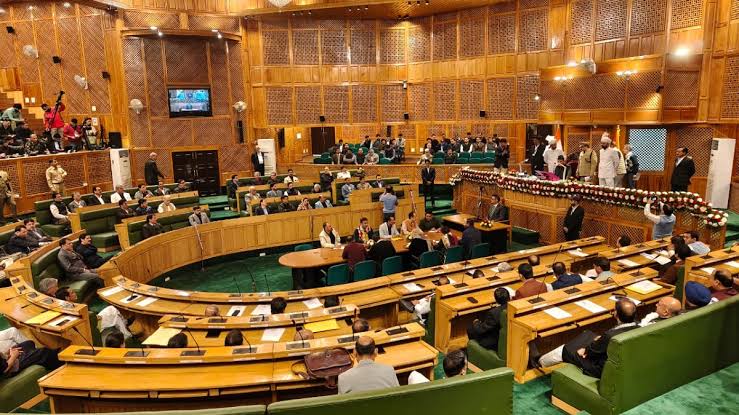 Early Times Report Early Times Report
Jammu, Sept 19: Five seats reserved for nominated members in the Jammu and Kashmir Legislative Assembly remain vacant as the House approaches its two-year mark — a gap that will still be unresolved when the autumn session opens in Srinagar next week.
The 10-day session, beginning September 21, will be the sixth since the assembly was elected in October 2024, yet the question of who fills these crucial seats continues to hang fire. Nominated members wield powers identical to elected MLAs — but unlike their elected counterparts, they answer to no electorate.
Section 15 of the J&K Reorganisation Act empowers the LG to nominate two women members if women are "not adequately represented" in the House — a provision carried over, with minor tweaks, from the old state constitution. Back then, however, the Governor could only act on the elected government's recommendation. That check is now gone.
The remaining seats are earmarked for representatives of Kashmiri migrants (KPs) and Pakistan-occupied Jammu and Kashmir (PoJK) refugees — a category created through a 2024 parliamentary amendment. Their inclusion pushes the assembly's total strength to 95, not counting 24 seats still vacant for PoJK. Fill all five nominated seats, and the magic number for government formation shifts from 46 to 48 — a shift with real implications for majorities.
The seat count itself carries history. The delimitation commission that redrew J&K's assembly map handed Jammu six additional seats against just one for Kashmir — nearly equalising the two regions and fulfilling a long-standing BJP demand to break the Valley's traditional dominance over the state's politics. Notably, only one Jammu leader — veteran Congress figure Ghulam Nabi Azad, from Doda — has ever held the chief minister's post.
The nomination model mirrors Puducherry, where the LG can recommend three MLAs. When then-LG Kiran Bedi used this power to induct members without consulting the Congress government there, the move was challenged all the way to the Supreme Court between 2017 and 2018 — with petitioners arguing the Centre had bypassed the state government. The apex court found no illegality and let the nominations stand.
Now, a similar battle is brewing in Jammu and Kashmir. Former Congress MLC Ravinder Sharma has moved the J&K High Court, contesting the constitutional validity of nominated members under the Reorganisation Act. "The case is pending in the court and the next hearing is scheduled for September 25," Sharma said.
His core argument: allowing nominated, unelected members voting rights strikes at the basic structure of the Constitution — and could, in theory, flip an elected government's fate by turning a minority into a majority on the floor of the House. |
|
|
|
|
|
|
|
|
|
|
|
|
| |
| |
|
|
|
|
 |
|
|