news details |
|
|
| The Cost of Fragmentation is No Longer Hidden | | Broken information flows have long cost hospitals in lost clinician hours and stuck claims; the case now is for systems built to talk to each other | | 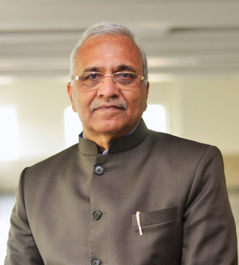 Dr Girdhar J. Gyani Dr Girdhar J. Gyani
Across much of India, the patient is still the main link between one doctor and the next. She carries her own medical history from visit to visit — a folder of papers, a phone full of scans, or nothing more than memory. Information is generated at every step of her care and, too often, left behind at each one. For hospitals, closing those gaps has rarely been the priority. For years, a digital mandate raised a narrower question: what would it cost, and how much would it ask them to change?
Healthcare is not an industry where a new system can be installed over a weekend. Hospitals run on legacy software, different clinical and administrative workflows, and widely varying levels of digital maturity. For smaller hospitals, every rupee spent on technology competes with beds, equipment and staff. The question was always whether a given system would solve a problem worth solving at all.
That question has now changed. The one that matters more is what fragmentation is already costing them.
The path a patient takes makes the loss visible. She may see a local doctor, take tests at a diagnostic centre, consult a specialist and finally be admitted. Each stage will generate information that probably won’t between a clinic to a lab.
We are all agonizingly familiar with what happens next: incomplete clinical histories, repeated tests, avoidable delays, and hours spent rebuilding information that already exists somewhere else. Data has too often been treated as an institutional asset to be held onto rather than information meant to travel with the patient. Proprietary formats and incompatible systems have deepened the fragmentation but now, the cost of keeping information locked away has simply grown too high for all of us.
It is against this cost that private hospitals have started to look at the Ayushman Bharat Digital Mission (ABDM) differently.
The World Health Organization (WHO) has emphasised that interoperability standards allow different digital health systems to exchange information and support continuity of care regardless of the software being used. Information generated at one point of care should be usable at the next.
International evidence links poor information continuity with poorer patient experiences, duplicate testing and delays in care. Better interoperability has been associated with reductions in diagnostic testing and hospital readmissions among shared and transferred patients.
The same breakdown shows up in administration. A hospital deals with many payers and each often works its own system and formats. Claims work turns needlessly slow and costly because those systems do not speak the same language, and it is the hospital’s finance team, and its cash flow, that absorb the friction.
This is the friction National Health Claims Exchange (NHCX) addresses by standardizing claims processes. Whether the information is a diagnostic report needed by a clinician or a claim that needs to move between a hospital and payer, information that cannot move is a failure of the system. NHCX and ABDM address different parts of healthcare, but the underlying principle is the same: information must be able to move securely, consistently and with the right safeguards.
But digital adoption cannot be imposed into healthcare; it needs to be built with healthcare providers. The WHO has cautioned that digital interventions implemented as isolated, supply-driven solutions can increase fragmentation and administrative burdens on health workers. Integration must therefore be the objective.
This is particularly relevant in India, where the private healthcare sector is enormously diverse. A large corporate hospital in a metropolitan city and a smaller hospital in a Tier-2 or Tier-3 town cannot be expected to have the same technology, resources or implementation capacity. A smaller facility may not have a dedicated technology team or resources to absorb a poorly designed workflow. Adoption will therefore depend on practical support and solutions that fit the way care is delivered.
As an ABDM Ambassador and NHCX Champion, the Association of Healthcare Providers of India (AHPI) has been working alongside the National Health Authority to help providers understand the practical value of these systems, support adoption across a diverse provider ecosystem and carry provider experience back to those designing them.
The private sector cannot afford to just be a recipient of India’s digital health infrastructure. Hospitals are among its most important users and therefore must be among its co-builders. Providers’ experiences of information silos and fragmentation have to shape the national push.
The work ahead splits four ways. Hospitals shed the data silos that serve no one; the health-tech industry builds products that interoperate; medical associations help smaller facilities through the first steps; policymakers hold the standards to shared, workable norms.
ABDM will have done its job when hospitals, doctors and patients feel the fragmentation ease. And when that finally happens, and it will, digital health will be viewed universally as a better, more efficient way to treat patients.
(The Author is Director General, Association of Healthcare Providers of India (AHPI). The views expressed are personal) |
|
|
|
|
|
|
|
|
|
|
|
|
| |
| |
|
|
|
|
 |
|
|