| Govt dismisses E20 fears, says no evidence of damage to older vehicles | | | 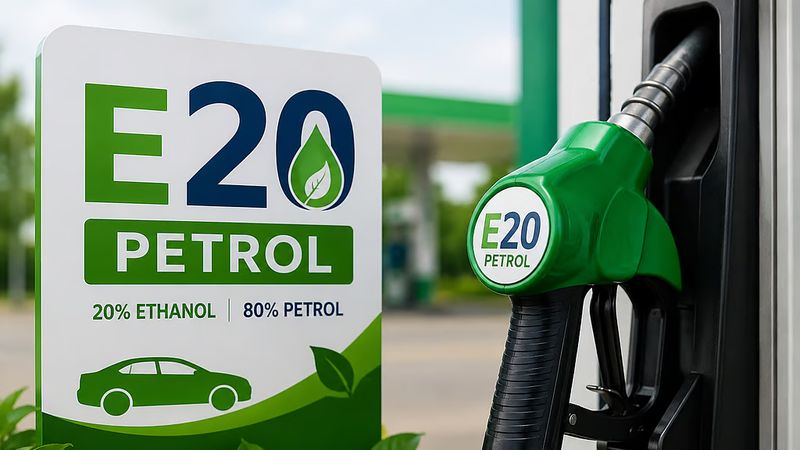 Early Times Report Early Times Report
NEW DELHI, July 10: The government on Friday dismissed concerns that E20 ethanol-blended petrol damages older vehicles, saying the fuel has undergone extensive scientific testing and years of real-world validation, with no evidence of widespread engine, fuel system or rubber component failures. In a detailed press note, the Ministry of Petroleum and Natural Gas said concerns over E20’s impact on vehicles originally certified for E10 fuel are driven by misinformation that has grown alongside India’s expanding ethanol blending programme.
It said allegations that E20 causes rubber hose failures, engine damage or fuel tank corrosion are not supported by scientific evidence.
According to the government, the transition to E20 was based on extensive consultations involving automobile manufacturers, the Automotive Research Association of India (ARAI), the Society of Indian Automobile Manufacturers (SIAM), oil marketing companies and technical institutions before the roadmap was finalised.
It noted that the 2021 NITI Aayog roadmap had outlined the transition from E10 to E20, providing vehicle manufacturers with advance visibility into the policy direction.
“E15+ blends have now been in operation across India for over 3.5 years,” the government said, adding that E20 was subjected to more than 40,000 km of scientific testing covering engine durability, fuel systems, material compatibility, corrosion resistance, drivability, emissions and performance before its rollout.
Citing field experience, the government said Maruti Suzuki alone serviced nearly 2.5 crore vehicles, including around 1.5 crore older vehicles that were not originally certified as E20-compatible.
“If E20 were genuinely damaging rubber components, fuel lines or engines, we would have witnessed lakhs of warranty claims, widespread component failures and an avalanche of complaints across the country. That has simply not happened,” it said.
The government also addressed concerns over older vehicle manuals specifying “E10 compatible”, saying such labels reflect the fuel specification in force when the vehicle was homologated and certified, and do not imply that the vehicle becomes unsafe when fuel standards are upgraded following scientific validation and regulatory approval.
It further said India’s ethanol supply chain is regulated under Bureau of Indian Standards (BIS) specifications, with quality checks conducted from distilleries to depots and retail outlets. It added that states have been asked to take strict action against any instances of fuel adulteration.
The government maintained that E20 is a “safe, cleaner, proven and scientifically validated fuel” whose quality and compatibility have been validated by automobile manufacturers, testing and homologation agencies, oil marketing companies and regulatory authorities, while urging consumers not to be misled by unverified claims circulating on social media. |
|
